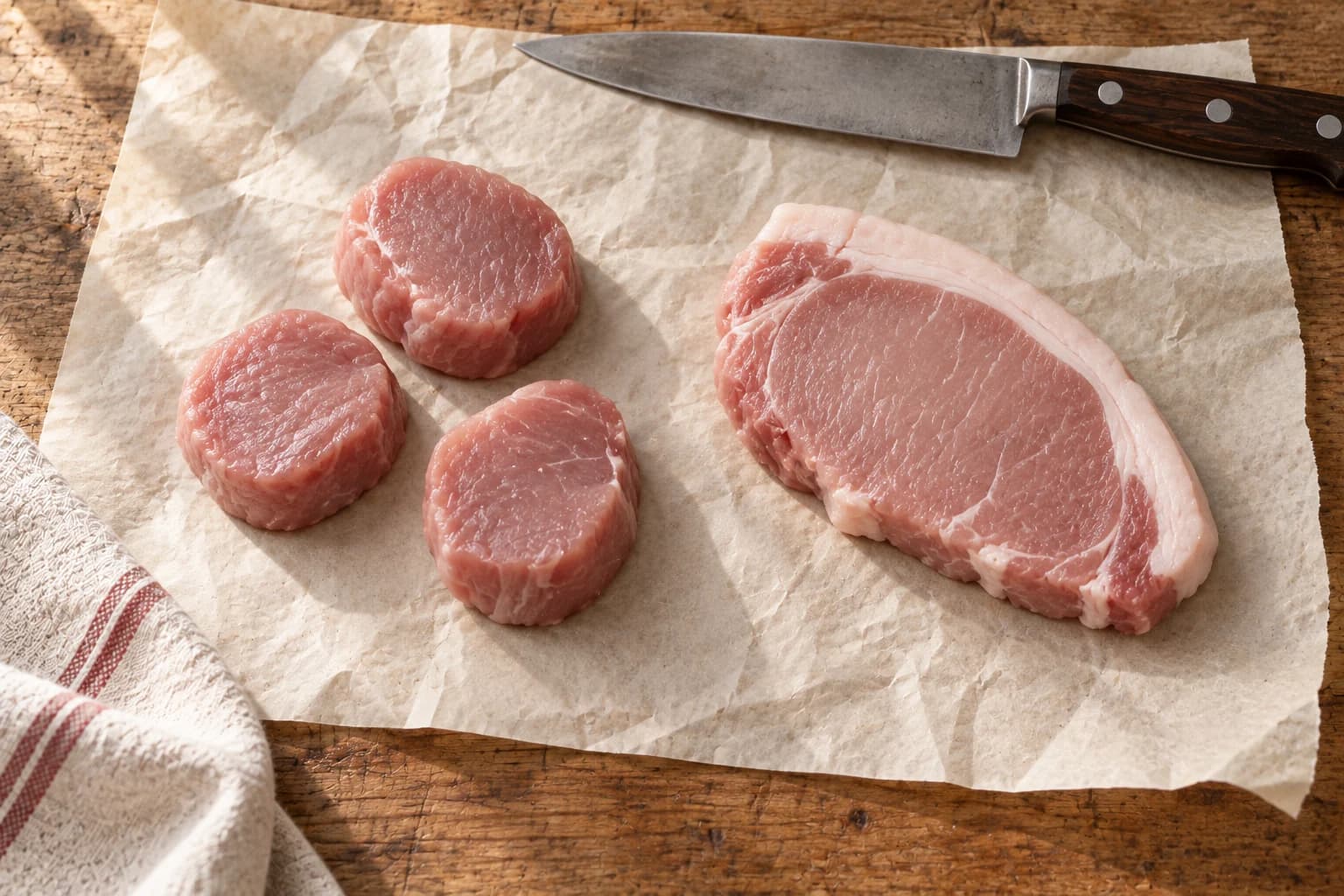
Hire katsu is tonkatsu made with pork tenderloin; rosu katsu uses pork loin. Tenderloin is lean and tender. Loin is generally fattier and may retain a visible edge of fat. Choose according to whether you prefer lean meat or enjoy that fatty edge, not whether you consider yourself a beginner or an expert.
If you are reading a French menu or buying pork in France, the useful equivalents are hire = tenderloin = filet mignon and rosu = loin = longe. The French word échine is not a translation of loin. Japan Guide identifies tenderloin and loin as the two usual tonkatsu cuts.
Two cuts, the same basic dish
Tonkatsu is breaded, deep-fried pork. Hire and rosu identify the cut rather than two mutually exclusive recipes. Breading, cooking and accompaniments matter with either one: the cut's name cannot guarantee juicy meat or a crisp crust.
Hire (ヒレ) is pork tenderloin. Its appeal is its tenderness and leanness. If you dislike finding a strip of visible fat in a bite, that is a more useful guide than calling the finished dish “light”. Lean meat is still breaded and fried here; the word hire does not tell you the nutritional value of the whole meal.
Rosu (ロース) is pork loin. Japan Guide describes it as fattier than hire, but the amount of fat left on a portion depends on the meat and how it is trimmed. Do not expect every loin cutlet to be heavily marbled, or assume that all its fat will disappear during frying. Enjoying that part of the meat is a good reason to choose rosu; disliking it is a good reason to consider hire.
| Menu cue | Hire katsu | Rosu katsu |
|---|---|---|
| Japanese | ヒレかつ | ロースかつ |
| Pork cut | Tenderloin | Loin |
| French equivalent | Filet mignon | Longe |
| Main distinction | Lean, tender cut | Generally fattier, possibly with a visible fatty edge |
| Useful preference | You prefer to avoid visible fat | You enjoy some fat with the meat |
| Check on the menu | Portion size, accompaniments and price | Portion size, trimming and price |
Choosing without the folklore
For a first taste, start with whether you enjoy visible fat. There is no requirement to begin with hire and work your way up to rosu. Both let you explore the contrast between pork and crisp breading.
Next, check what the portion includes. Neither name sets the weight, thickness or number of pieces. A menu description or photograph is more useful than a blanket claim that hire is always thin and rosu always thick.
Compare prices for comparable portions and accompaniments. A difference on one menu is not a universal supplement. This guide therefore does not quote a fixed euro premium or promise that one cut always costs more than the other.
Also distinguish the cut from the meal format. A teishoku is a set meal, not a third pork cut. Japan Guide describes tonkatsu served with shredded cabbage, rice, miso soup and pickles. Check which sides are actually included when ordering.
Buying the pork in France
Tell the butcher you want to make breaded pork cutlets in the tonkatsu style. For hire, ask for filet mignon de porc. For rosu, ask for longe désossée, specifying how much fat you want left on. Showing the English terms tenderloin and loin can help avoid confusion: filet mignon is more explicit than filet alone.
The cut is only part of the preparation. On its official website, Maisen describes cutting connective tissue and working the meat before breading. Just One Cookbook also describes preparing the pork and coating it in flour, egg and panko. These are methods documented by those sources, not a recipe tested by TontonKatsu. Follow a complete recipe suited to your piece of meat rather than choosing a frying time from the word hire or rosu alone.
Frequently asked questions
Is rosu a shoulder or neck cut?
In this comparison, rosu means pork loin. It should not be translated as the French échine, which names a different cut.
Is hire necessarily better or more expensive?
Neither taste nor price follows from the name alone. Hire is primarily a useful choice for someone who prefers lean meat. For prices, compare the actual menu and portions rather than relying on a supposed rule for all restaurants.
Can I try both at TontonKatsu?
Not at present. TontonKatsu is a Japanese bistro concept, not an open restaurant. There are no confirmed premises or opening date. This guide explains menu vocabulary; it does not describe food currently available from us.
Sources
Sources checked on 4 October 2026. This substantive revision corrects the French translation of rosu and removes unsupported prices, restaurant recommendations and claims that TontonKatsu already serves these dishes.
- Japan Guide — Tonkatsu: the hire/tenderloin and rosu/loin distinction and usual accompaniments.
- Just One Cookbook — Tonkatsu: cuts and preparation steps; the page displays a publication date of 20 February 2025.
- Maisen — Ingredients and preparation, official website: the restaurant's own account of meat preparation and breading, not evidence of a hire-at-lunch or rosu-at-dinner recommendation.