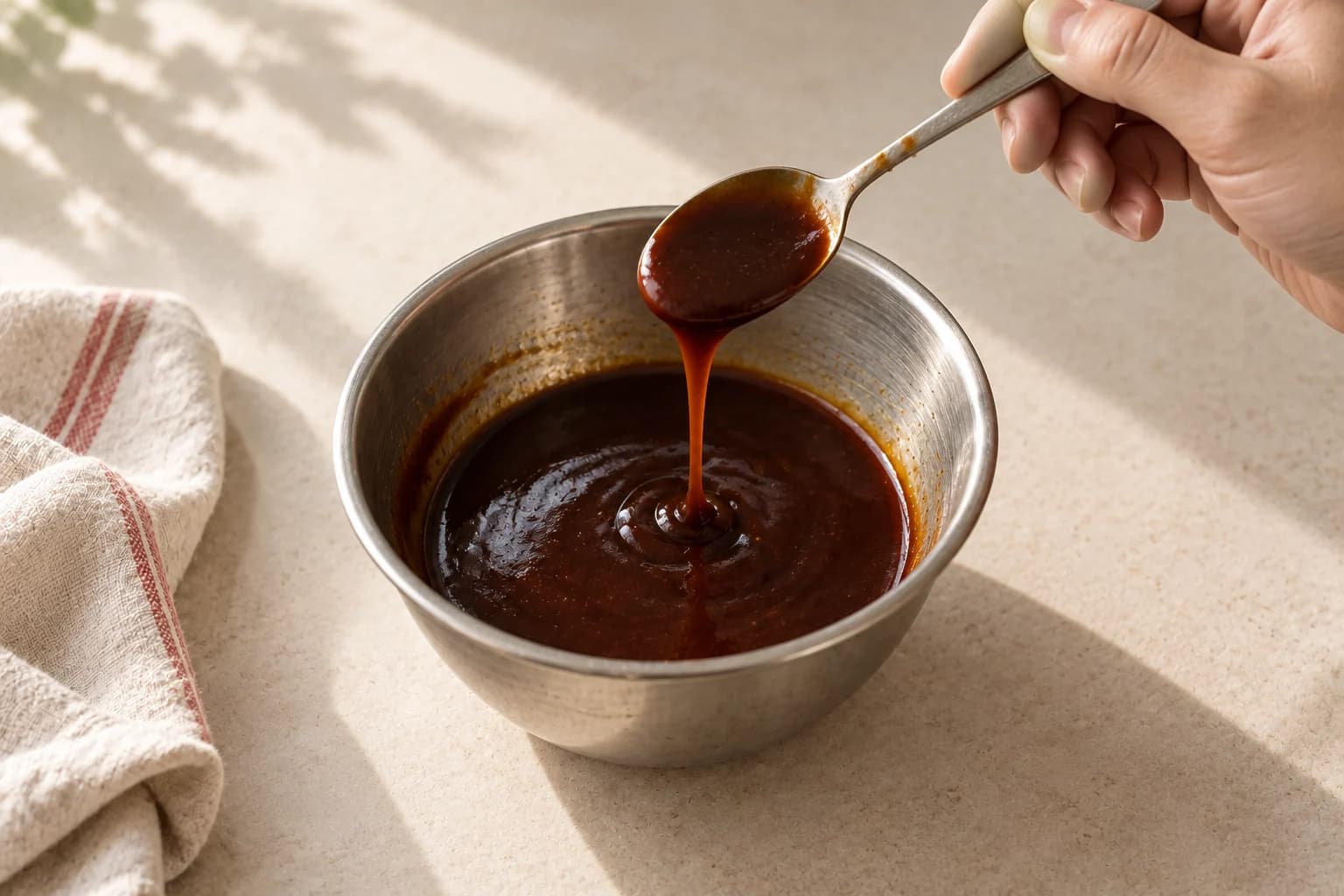
You can deep-fry the most perfect tonkatsu cutlet — golden panko, blush-pink centre, impeccable technique — and still ruin the experience with the wrong sauce. Or no sauce at all. That dark, glossy condiment sitting in its small dish next to your katsu is not an afterthought. It is the bridge between crust and meat, the sweet-savoury counterpoint that turns a good cutlet into something you remember. In Japan, people have strong opinions about their tonkatsu sauce. You should too.
Bull-Dog and the birth of tonkatsu sauce
The story starts in the early 1900s, during Japan's Meiji era — a period of furious modernisation where the country was absorbing Western ideas, technology, and food at remarkable speed. Among the imports that caught Japanese attention: Worcestershire sauce, that thin, fermented English condiment built on anchovies, tamarind, and vinegar. The Japanese tried it. They liked the idea. They did not like the taste — too sharp, too thin, too aggressively sour for a palate accustomed to umami and sweetness.
In 1902, Yamazaki Vinegar Company created what would become Bull-Dog Sauce — a thicker, sweeter, fruitier adaptation of Worcestershire sauce specifically designed for Japanese tastes. They used vegetables and fruits (tomatoes, apples, dates, prunes) instead of relying heavily on anchovies and fermentation. The result was a sauce that was recognisably Western in spirit but entirely Japanese in execution: viscous enough to cling to fried food, sweet enough to complement rice, and complex enough to stand on its own.
As tonkatsu rose from a Meiji-era curiosity to a national dish through the 1920s and 1930s, Bull-Dog Sauce rose with it. The pairing became inseparable. By the mid-20th century, "tonkatsu sauce" was its own category in Japan — distinct from Worcestershire, distinct from okonomiyaki sauce, distinct from yakisoba sauce. All cousins, all different. Bull-Dog remains the market leader to this day, with the iconic bulldog logo instantly recognisable in any Japanese supermarket.
Homemade recipe — 5 ingredients, 2 minutes
You do not need Bull-Dog to make excellent tonkatsu sauce at home. Five ingredients from any supermarket, mixed in a bowl, rested for ten minutes. That's it. Here are the exact proportions:
- Ketchup: 4 tablespoons (~60g)
- Worcestershire sauce: 2 tablespoons (~30g)
- Soy sauce: 1 tablespoon (~15g)
- Mirin: 1 tablespoon (~15g)
- Brown sugar or honey: 1 teaspoon (~5g)
Mix everything together in a small bowl. Let it sit for at least 10 minutes — this allows the flavours to meld and the sugar to dissolve fully. Taste and adjust: more ketchup for sweetness, more Worcestershire for tang, more soy for depth. The sauce should be thick enough to coat the back of a spoon without running off immediately.
This ratio produces a sauce that is remarkably close to commercial tonkatsu sauce — slightly sweet, tangy, with enough umami backbone from the soy to stand up to fried pork. It stores well in the fridge for 2 to 3 weeks in an airtight jar. Some people add a pinch of garlic powder or a dash of oyster sauce. Both work. The base recipe above is the one to master first.
The best brands you can actually buy
If you would rather buy than make, three brands dominate and all are available internationally:
Bull-Dog Tonkatsu Sauce — The original. Founded in 1902, still the reference. Thick, fruity, with a depth of flavour that comes from over a century of recipe refinement. The "Tonkatsu" version (as opposed to their thinner "Chuno" or "Usta" sauces) is the thickest and sweetest in their range, designed specifically for fried cutlets. If you buy one bottle, buy this one.
Kikkoman Tonkatsu Sauce — Kikkoman is better known for soy sauce, but their tonkatsu sauce is excellent. Slightly less sweet than Bull-Dog, with a more pronounced Worcestershire note. Good for people who find Bull-Dog a touch too sugary.
Otafuku — Technically famous for their okonomiyaki sauce, Otafuku also makes a tonkatsu variant that is thicker and more vegetal, with dates and apples prominent in the flavour. A solid choice if you like your sauce on the fruitier side.
All three are available on Amazon, in Asian grocery stores, and at specialty shops. In Paris, Kioko (46 rue des Petits Champs, 2nd arrondissement) stocks Bull-Dog and Kikkoman year-round. Most Asian supermarkets in major cities carry at least one of these brands.
How to use tonkatsu sauce properly
The biggest mistake people make with tonkatsu sauce: drowning the cutlet. Pouring sauce all over a freshly fried tonkatsu is the fastest way to destroy the panko crust you worked so hard to get crispy. The steam from the hot meat turns the sauce into a soggy blanket. Within two minutes, your golden crust is a damp, brown mess.
The Japanese approach: serve the sauce on the side, in a small dish. Dip each slice as you eat it, or drizzle a thin line across the cut surface. This way, the crust stays crunchy on top while the sauce flavours the meat where it has been sliced. Some purists eat the first bite with no sauce at all — just panko, pork, and salt — to appreciate the quality of the fry before adding any condiment.
Variations exist. Some restaurants mix tonkatsu sauce with karashi (Japanese hot mustard) for a spicier kick. Others offer sesame seeds on the table — you grind them in a suribachi mortar and mix them into the sauce for a nutty, aromatic twist. At katsudon restaurants, the sauce is replaced entirely by a dashi-based broth with egg, which serves a different purpose. The point is: the sauce should complement, never dominate.
Whether you make your own or crack open a bottle of Bull-Dog, tonkatsu sauce is the finishing touch that elevates the dish. Get it right and you will understand why the Japanese created an entire condiment category just for this one cutlet. It deserves it.
Frequently asked questions
How do you make homemade tonkatsu sauce?
Mix 4 tablespoons of ketchup, 2 tablespoons of Worcestershire sauce, 1 tablespoon of soy sauce, 1 tablespoon of mirin, and 1 teaspoon of brown sugar or honey. Let it rest for 10 minutes, then adjust to taste.
What is the best tonkatsu sauce brand?
Bull-Dog Sauce has been the gold standard in Japan since 1902. Kikkoman and Otafuku are also excellent alternatives, all widely available online and in Asian grocery stores.
How long does homemade tonkatsu sauce last?
Homemade tonkatsu sauce keeps in the fridge in an airtight jar for 2 to 3 weeks. Store-bought sauces last several months after opening when refrigerated.
Are tonkatsu sauce and Worcestershire sauce the same thing?
No. Tonkatsu sauce is thicker, sweeter, and fruitier than Worcestershire. It was inspired by English Worcestershire sauce during the Meiji era but evolved into a distinct condiment tailored to the Japanese palate.
At TontonKatsu, our tonkatsu sauce is made from scratch.