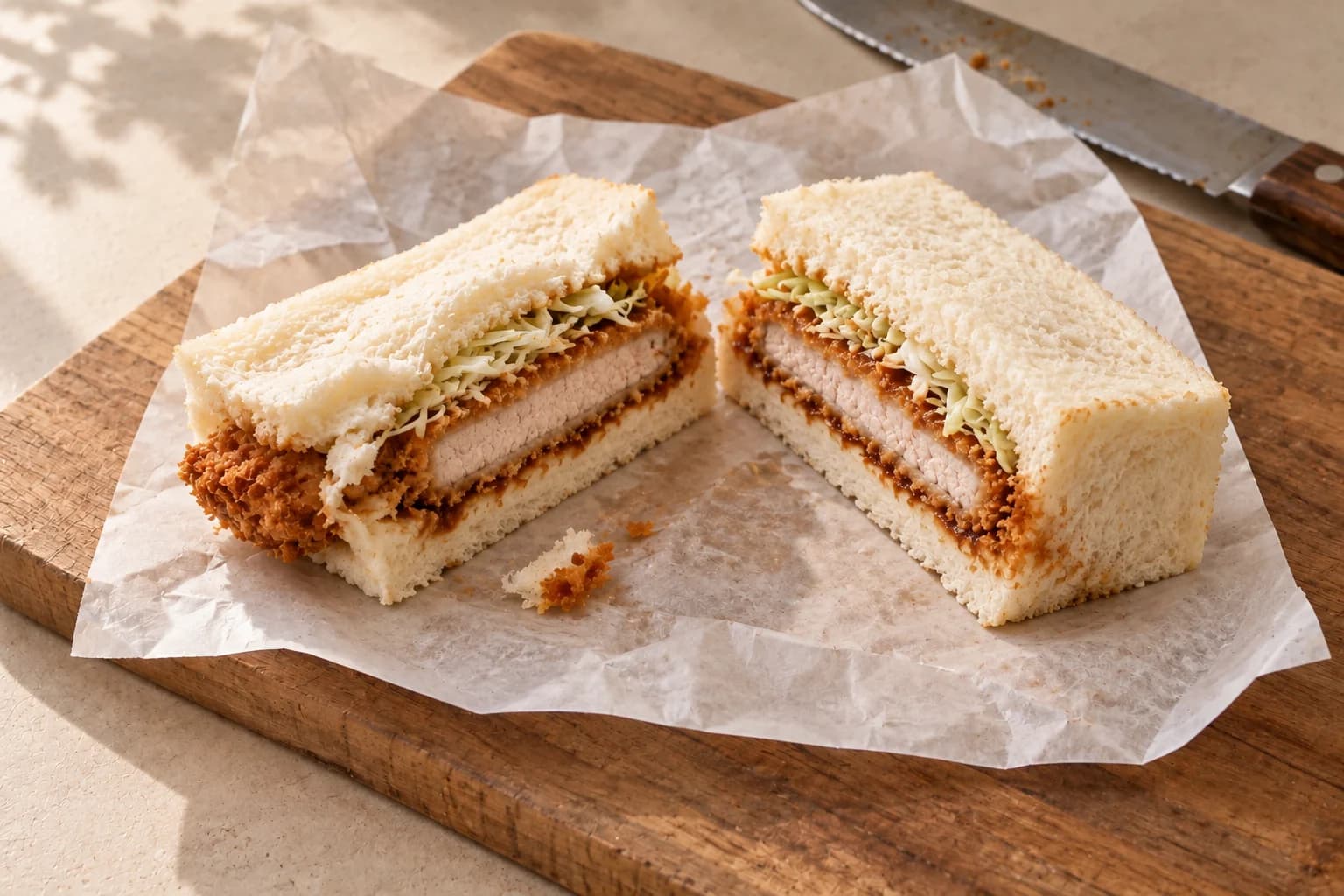
A katsu sando puts a breaded cutlet between two slices of soft sandwich bread, with sauce and sometimes shredded cabbage. Pork is a classic filling, but chicken versions exist too. The name describes a family of sandwiches rather than one fixed recipe. Before ordering, three details tell you more than a dramatic cross-section photograph: the meat, the bread and the sauce.
A timely connection: 22 September, the book’s announced release date
As checked on 22 September 2026, Tuttle’s listing gives that date for the publication of Walter Ishizuka’s Sando. The website of his Paris restaurant, Yabaï Sando, also displays 22 September for the English edition. These listings confirm the announced date, not independently verified availability in bookshops or for delivery. A tonkatsu sandwich is among the recipes described by the publisher. That is a useful reason to explore the format — not evidence of a new trend, or a review of a book we have tested. Publisher’s listing.
The bread changes how you eat the cutlet
On a tonkatsu plate, the rice and cabbage sit beside the pork. In a sando, bread holds the meal together: the cutlet is meant to be part of each bite rather than something you eat separately from its accompaniments. Shokupan, a very soft Japanese sandwich loaf, is a common choice. Just One Cookbook uses it in its recipe and also suggests soft white bread as an alternative.
That makes it more than a square burger. The usual visual clues are sliced bread rather than a round bun, and a breaded cutlet rather than a minced-beef patty. Restaurant interpretations can depart from that pattern. Trimmed crusts and an immaculate cut are not, on their own, a reliable test of how good the sandwich will be.
Pork, chicken, egg: read beyond the word sando
Sando means sandwich; katsu points to a breaded preparation. Tonkatsu sando specifies pork, while chicken katsu sando specifies chicken. A tamago sando belongs to a different family: it is an egg sandwich, not necessarily a breaded filling. Sando on its own therefore makes no promise of crunch.
Pork menus may name the cut too. Rosu is loin; hire is tenderloin. That tells you about the meat, not the size of the sandwich or its side dishes. If you have dietary requirements, check the sauce and bread as well: the menu heading is no substitute for asking the restaurant.
Sauce and cabbage do more than fill a gap
Fruity, tangy tonkatsu sauce is a classic partner, but not a universal requirement. A menu might feature mustard, mayonnaise or a house dressing. The publisher’s description of Ishizuka’s book pairs his tonkatsu sando with a ginger-wasabi sauce, for example. That is one advertised variation, not a rule for every sandwich.
Shredded cabbage brings another texture. Just One Cookbook lists it as optional, so its absence does not automatically make a sandwich wrong. Think about the combination instead: do you want the cutlet to dominate, or would you prefer more vegetables and a more prominent dressing?
Three useful questions before you order
First, what exactly is breaded? That avoids mistaking chicken for pork or assuming every sando contains katsu. Second, which sauce and fillings are included? A spicy mayonnaise and tonkatsu sauce are different starting points. Third, what comes with it? A sandwich on its own and a set with side dishes cannot be compared by the headline price alone.
For eating in or taking away, ask how it is served too. A cold assembly, a made-to-order sandwich and a version packed for a journey have different aims. We have not tested how they hold up in transit; a promise of perfect crunch after a precise number of minutes would be an invented measurement.
Why the format interests TontonKatsu
The katsu sando keeps its central idea easy to understand: one breaded piece, a few supporting ingredients and a format suited to everyday eating. That fits our thinking about approachable Japanese neighbourhood food. It does not mean a sandwich has been added to a final restaurant menu.
TontonKatsu remains a restaurant in development, with no confirmed premises or opening date. This journal documents ideas rather than pretending to report from an operating dining room. For now, the sando gives us a useful question to explore: how do you make room for crunch without making a meal complicated?
Check the sources and explore further
Sources rechecked on 22 September 2026. Just One Cookbook’s recipe was updated on 12 February 2025; it is a culinary reference, not current news. The book date remains the publisher’s announced release date; we have not verified stock or delivery times. No partnership, purchase or hands-on assessment of the book is claimed.
- Just One Cookbook — Katsu Sando
- Tuttle Publishing — Sando, Walter Ishizuka
- Yabaï Sando — site officiel / official website