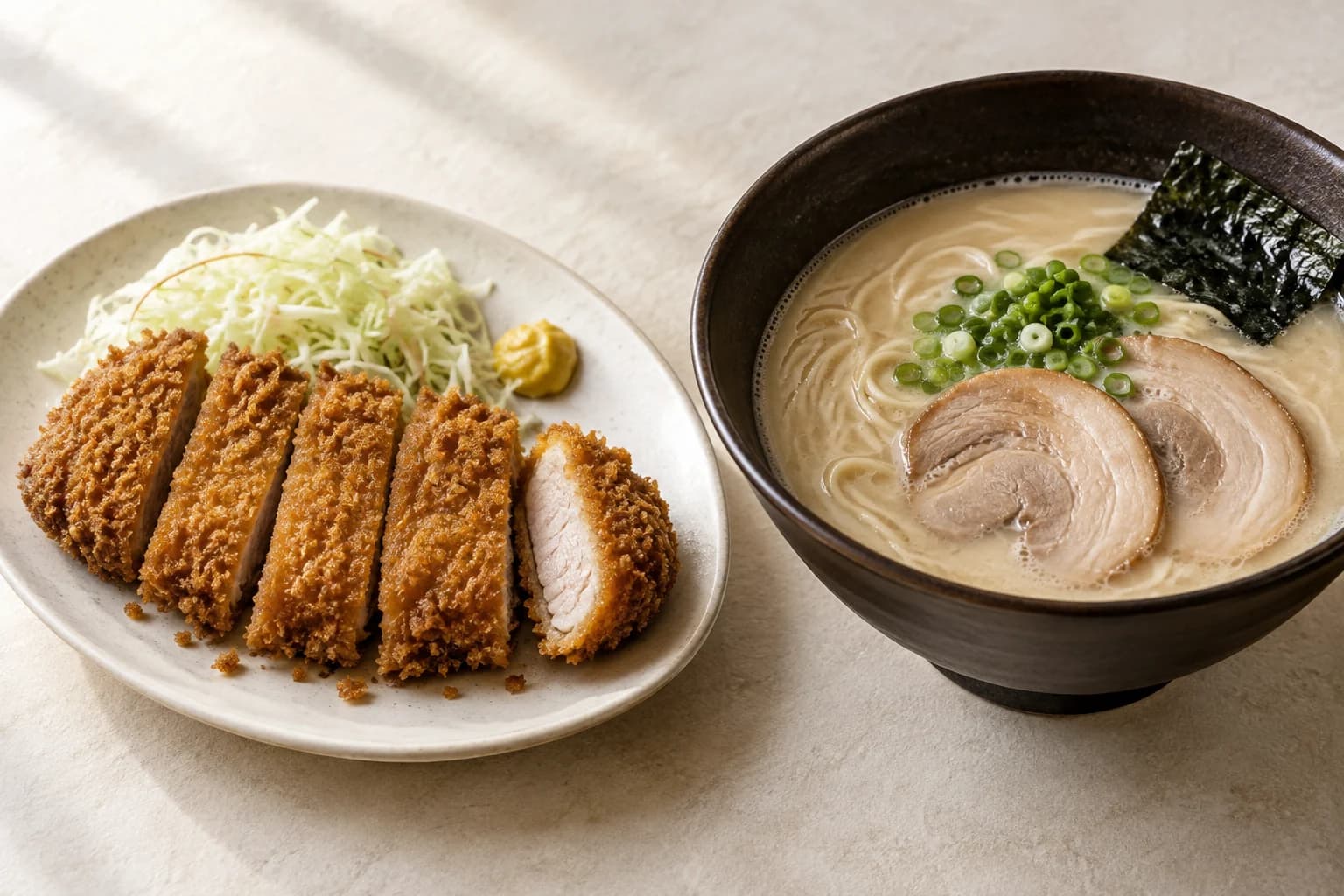
Tonkatsu is a breaded, deep-fried pork cutlet. Tonkotsu is a broth made from pork bones, notably used in ramen. Just one vowel changes, but the meal shifts from a crisp piece of meat to a bowl of noodle soup. These practical clues will help you order the dish you actually want.
Tonkatsu: the crisp coating takes centre stage
A tonkatsu is recognisable by its breadcrumb crust and the slices it is cut into. The meat is the centrepiece: rice, shredded cabbage and miso soup may accompany it as a set meal, or teishoku. Tonkatsu sauce is a condiment served with the cutlet, not a soup stock.
Menus often offer two cuts: hire, pork tenderloin, and rosu, pork loin. The former is leaner, while the latter usually has more fat. These names specify the cut of meat, not a different kind of ramen. Our tonkatsu guide also explains how the cutlet appears in katsudon and katsu curry.
Tonkotsu: the name describes the broth
In tonkotsu ramen, pork bones are used to prepare the broth. It is usually cloudy, with a rich texture. Noodles and toppings complete the bowl. Japan-guide describes this style as particularly popular in Kyushu.
The meat on the noodles may be chashu, roasted or braised pork depending on the preparation: it is not automatically a breaded cutlet. A bowl can therefore contain pork without containing tonkatsu. Equally, a bowl of miso soup beside a tonkatsu plate does not make that meal tonkotsu ramen.
Four names worth recognising on a menu
Tonkatsu: look for a breaded pork cutlet. Tonkotsu ramen: expect noodles in a pork-bone broth. Katsudon: the cutlet is served over rice, often with egg and onion. Katsu curry: the breaded piece accompanies Japanese curry and rice.
Katsu alone does not guarantee pork. Chicken katsu, for instance, is breaded chicken. For dietary requirements, read the full description and ask the restaurant: a dish’s name does not necessarily disclose every ingredient in its sauce, broth or coating.
How to choose the meal you feel like eating
If you want a crisp crust, sliced meat and separate accompaniments, tonkatsu is the useful term. If you are craving a hot bowl, noodles and broth, look at the ramen section and then check which broth is offered.
In katsudon, the coating meets a moist preparation: the intended balance is different from a cutlet served on its own. Sauce is an important part of katsu curry, too. These are not failed versions of a crisp tonkatsu, but different ways of enjoying it.
Do not infer that either dish is lighter from its name alone. Portion size, the cut of meat, the amount of sauce and the broth recipe all vary. Without nutrition information for the actual serving, a precise nutritional ranking would be misleading.
What this distinction means for TontonKatsu
Our starting point is katsu: warm, approachable Japanese bistro food built around that crisp coating. This journal explores the food and explains the terms found on menus. It is not a report from a restaurant already in service, or an opening announcement.
The menu on this website is illustrative. Recipes, prices and a location still need to be validated. You can explore the concept and follow its progress; reservations and food orders are not available yet.
Common questions
Are tonkatsu and tonkotsu the same thing?
No. Tonkatsu is a breaded, deep-fried pork cutlet. Tonkotsu is a pork-bone broth, often served with ramen noodles.
Does tonkotsu ramen include a breaded cutlet?
Not by definition. The name describes the broth. Toppings vary and may include chashu; a breaded cutlet would be a separate addition.
Is tonkatsu sauce used to make tonkotsu?
They are different preparations. Tonkatsu sauce accompanies dishes such as breaded cutlets, while tonkotsu broth is made from pork bones.
Sources and further reading
Sources checked on 15 September 2026. This is a researched food guide; it does not claim first-hand tastings or restaurant service experience.