In Japan, tonkatsu is not just a dish. It is an art form with dedicated temples. Some restaurants have served nothing but tonkatsu for generations, perfecting every detail over decades. Here are the houses that defined what great tonkatsu means, and what any serious tonkatsu restaurant should learn from them.
Tonki, Meguro: the original temple (since 1939)
Founded in 1939 in the Meguro neighbourhood of Tokyo, Tonki is widely considered the oldest continuously operating tonkatsu specialist in Japan. The restaurant has barely changed in 85 years. The long counter faces the open kitchen where cooks work in silent, choreographed precision. There is no menu to speak of: you order rosu katsu or hire katsu, nothing else. The loin set (rosu katsu teishoku) is the default, and most regulars never deviate.
What makes Tonki special is the rhythm. Each cutlet is fried twice: a first pass at lower temperature to cook the pork through gently, then a second flash at higher heat to set the panko crust into something impossibly light and shattering. The cabbage is shredded so finely it resembles silk. Miso soup arrives in a lacquer bowl, rich with tofu and wakame. The entire meal costs around 2,000 yen (about 12 euros) and has not changed much in price or spirit for decades.
The lesson from Tonki: obsessive consistency. Do one thing, do it the same way every day, never cut corners. The queue stretches down the stairs most evenings, proof that simplicity, done perfectly, never goes out of fashion.
Maisen, Omotesando: tonkatsu for everyone
Maisen occupies a converted pre-war bathhouse in the heart of Omotesando, one of Tokyo's most fashionable neighbourhoods. Founded in 1965, it became the restaurant that democratised high-quality tonkatsu. Where Tonki is monk-like, Maisen is generous and welcoming: a large dining room, a varied menu, takeaway counters selling their famous katsu sando (tonkatsu sandwiches), and a consistent standard that rarely disappoints.
Maisen is known for its kurobuta (black pork) options and for offering both hire katsu and rosu katsu at several quality tiers. The house sauce is served in small ceramic pots alongside sesame seeds to grind at the table. Their katsu sando, sold at the takeaway window, has become a Tokyo icon: thick, juicy cutlets between pillowy shokupan bread, wrapped in wax paper.
The lesson from Maisen: accessibility does not mean compromise. You can serve hundreds of covers a day without sacrificing quality, as long as systems and sourcing are rigorous.
Butagumi, Nishi-Azabu: the sommelier approach
Butagumi (literally "the pork guild") in the upscale Nishi-Azabu neighbourhood took tonkatsu in a radically different direction when it opened in 2003. Instead of one or two standard pork options, Butagumi offers a curated selection of heritage breeds from across Japan: Agu pork from Okinawa, Hayakita pork from Hokkaido, Barkshire crosses from Kagoshima. The menu reads like a wine list, with tasting notes for each breed's texture, fat quality and flavour profile.
At Butagumi, the chef adjusts frying time and oil temperature for each breed. A heavily marbled Agu loin gets a slightly lower temperature and longer fry to render the intramuscular fat, while a leaner breed gets higher heat for a crisper result. The teishoku set is impeccable, the rice always perfectly steamed, the pickles house-made.
The lesson from Butagumi: pork sourcing is everything. Knowing your breeds, your farmers, your fat ratios is what separates a good tonkatsu from a transcendent one.
Katsuzen, Osaka: the Kansai counter
While Tokyo dominates the tonkatsu conversation, Osaka has its own tradition. Katsuzen, a small counter restaurant in the Namba area, represents the Kansai approach: slightly thinner cuts, a touch more seasoning in the panko, and a preference for a darker, more caramelised crust. The atmosphere is informal and loud, matching Osaka's famous street-food energy. Katsuzen proves that tonkatsu is not a monolith. Regional variations matter, and each adds something to the craft.
Modern wave: Narikura, Katsukura, and the new precision
The 2010s and 2020s brought a new generation of tonkatsu restaurants that combine traditional technique with modern precision. Narikura in Takadanobaba and Katsukura in Kyoto exemplify this movement: digital oil temperature monitoring, carefully controlled resting times, and an almost scientific approach to achieving the perfect ratio of crust to meat. These restaurants attract younger diners without alienating traditionalists.
What defines this modern wave is transparency. Many of these restaurants openly discuss their sourcing, their frying technique, their panko preparation. They understand that today's customers want to know the story behind the food.
What TontonKatsu learns from these legends
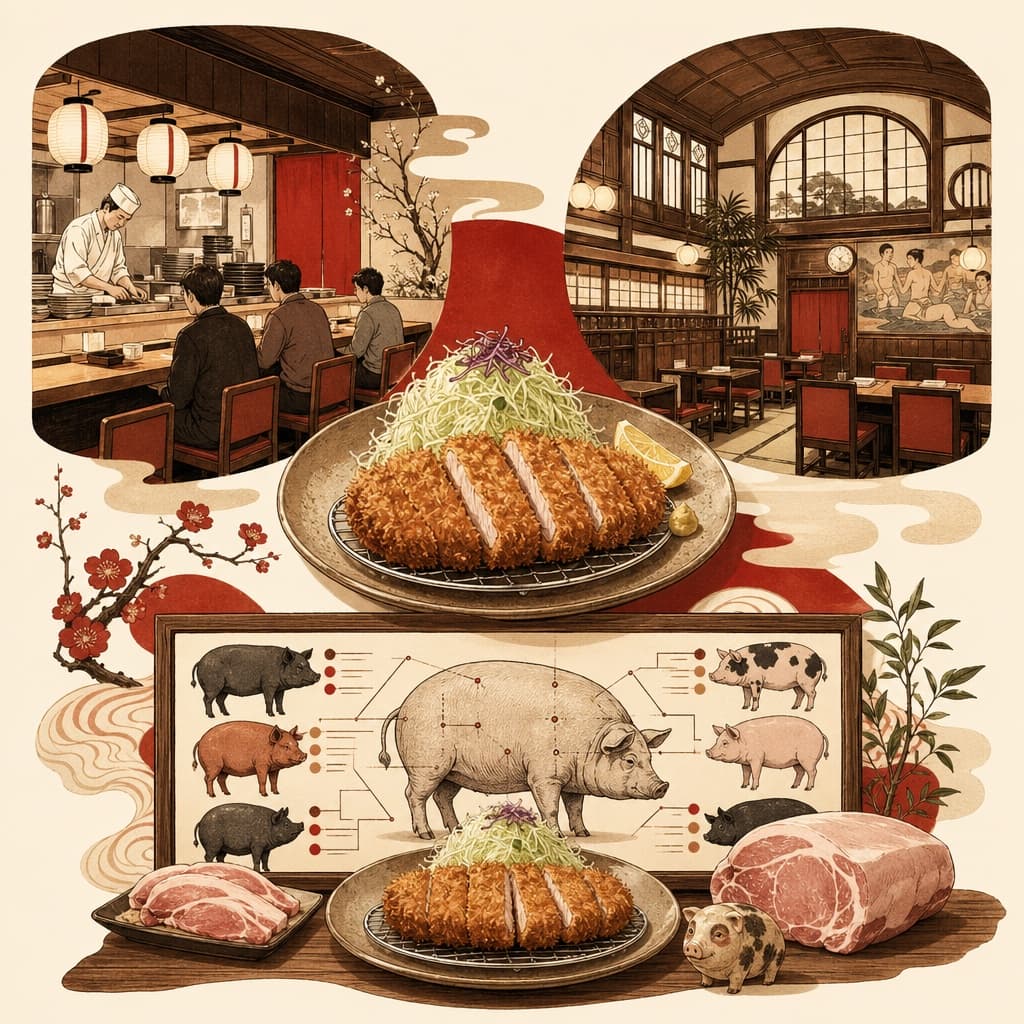
Every great tonkatsu house we have studied reinforces the same principles: source the best pork you can find and know your breeds. Prepare panko fresh. Control oil temperature with precision. Serve the complete teishoku because tonkatsu is never just the cutlet. And above all: pick your standard and hold it, every single day.
These are the principles that TontonKatsu is building on for West Paris. Not a copy of any single Japanese house, but a restaurant shaped by the lessons of all of them.
Follow the TontonKatsu adventure as we bring these standards to West Paris.